Rustic Retreat
Hot Projects
Live broadcasts and documentation from a remote tech outpost in rustic Portugal. Sharing off-grid life, the necessary research & development and the pursuit of life, without centralized infrastructure.

Subscribe to our new main project Rustic Retreat on the projects own website.
Apollo-NG is a mobile, self-sustainable, independent and highly-experimental Hackbase, focused on research, development and usage of next-generation open technology while visiting places without a resident, local Hackerspace and offering other Hackers the opportunity to work together on exciting projects and to share fun, food, tools & resources, knowledge, experience and inspiration.
Although HDD storage densities have increased dramatically over the years, one of the most elemental aspects of hard disk drive design, the logical block format size known as a sector, has remained constant. Beginning in late 2009, accelerating in 2010 and hitting mainstream in 2011, all major manufacturers are migrating away from the legacy sector size of 512 bytes to a larger, more efficient sector size of 4096 bytes, generally referred to as 4k or AF (Advanced Format).
While researching the benefits and consequences of a 512→4k transition, many reports of “partition misalignment issues” were found, that could lead to a severe performance impact which led to a closer investigation to verify the alleged problem and the proposed correct partition alignment. The result is obvious: Misaligned partitions on 4k harddisks introduce a severe performance impact, in this test case by a factor of 5.5 (Aligned: 83MB/s vs. misaligned: 15.5MB/s).
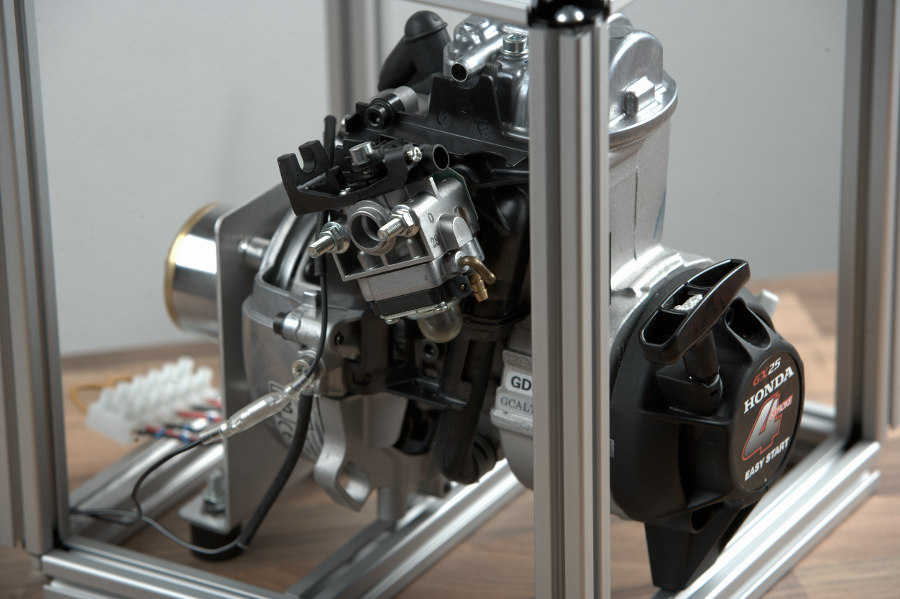
What started out as a simple thread on a mobile-home board, ended up in more than 50 pages of discussion about a neat and small generator project based on a Honda GX25 and a Torcman 430-30 brushless outrunner motor. Some people always seem to ask, why anyone would build something like that, if they could get more output power for less money from a ready made product? Because available products don't really match the requirements and why would anyone pay money for something one actually doesn't really want or need?
Apollo-NG needs multiple independent energy sources to be able to function autonomously and independently from grid infrastructure. Although the basic requirements are supposed to be covered by alternative power technologies like solar and wind power, it never hurts to have a fallback for a rainy day. That's where the apu comes into play:
The Apollo-NG website and its underlying/supporting infrastructure was beginning to show some severe issues caused by lacking upstream support for Linux VZ. Additionally, for other reasons, whole IP ranges had to be moved so each Box had an additional interface for the migration period which made HTTP or git communication with github.com impossible. That's why the automated deployment of DSpace failed.
However, http://www.netcup.de/ gratefully decided to stick to their decision to sponsor Apollo-NG's hosted network infrastructure needs and provided a new KVM box with more disk space and memory.
The migration to the new box is complete now, hopefully all name servers got the hint as well. The pads are also back online and should also receive a considerable speedup. In the progression of the update the SPDY (Speedy) protocol was added to collect some metrics about the performance gain and to see how it behaves in a smaller set of the real world.
Hopefully, that will conclude this maintenance/update cycle and free resources to find more sponsors and to continue with ongoing projects