Rustic Retreat
Hot Projects
Live broadcasts and documentation from a remote tech outpost in rustic Portugal. Sharing off-grid life, the necessary research & development and the pursuit of life, without centralized infrastructure.
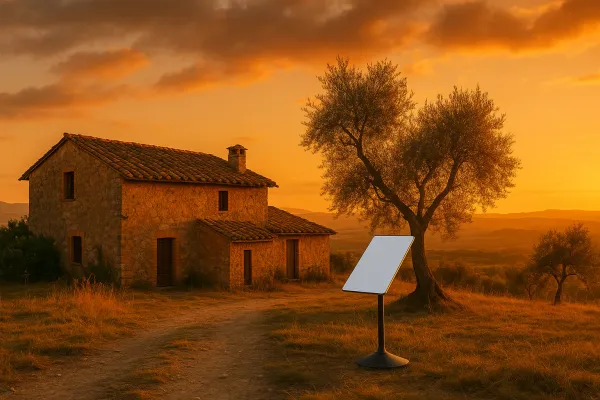
Subscribe to our new main project Rustic Retreat on the projects own website.
Apollo-NG is a mobile, self-sustainable, independent and highly-experimental Hackbase, focused on research, development and usage of next-generation open technology while visiting places without a resident, local Hackerspace and offering other Hackers the opportunity to work together on exciting projects and to share fun, food, tools & resources, knowledge, experience and inspiration.
When you're at this year's Chaos Communication Congress (31C3) and interested in RF/satellite hacking, you should make sure to find your way to Saal 1 on Day 2 at 16:45 (localtime) to enjoy Sec/schneider's talk about Iridium Pager Hacking.
After seeing xfce-planet in action @MUCCC, Sec used it to create this awesome timelapse video for more presentation eye-candy, showing all Iridium satellite positions and orbits. Very nice idea indeed!
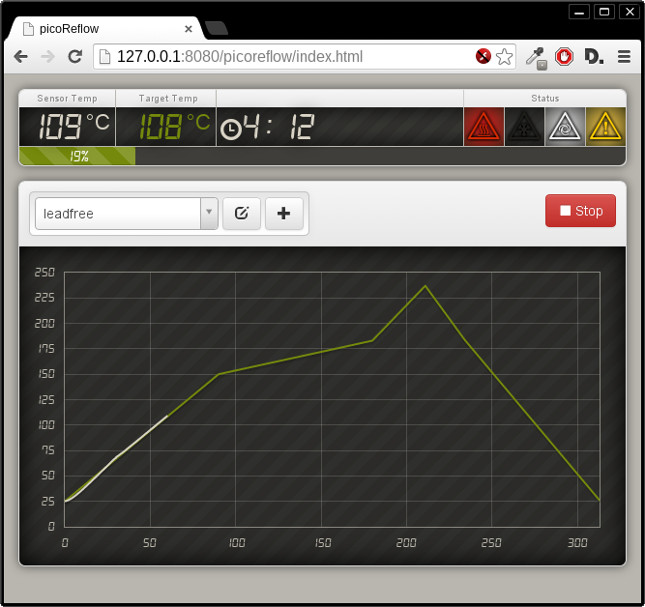
Today, another pull-request flew in, enhancing the picoreflow software stack with MAX6675 compatibility. Git and github are great tools for open collaboration but it takes some time to get used to them. Of course, the github auto-merge feature is great and works pretty reliable, but I still prefer to review and test PR's locally on the commandline, before actually merging them.
Github also offers some command line foo for this, as you can see in the screenshot above but I'd like to use this opportunity to share another way how to test, handle and merge github pull requests even more easily and comfortably, in case you're new to git/github and don't know about this yet in a real-world, step-by-step example.
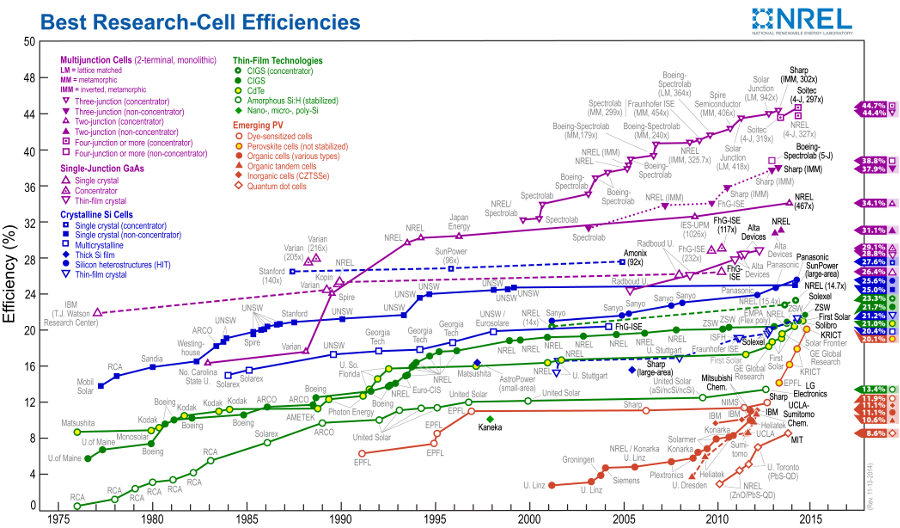
There are often reports about breakthroughs in alternative technologies and when I look, I can find charts claiming that in 2014/2015 top solar conversion efficiency is reported to be at about 45%. However, when I look harder I don't seem to find obtainable Panels above 21%. The highest grade I could get were the Mobile Technology MT-ST110 panels on the odyssey. I can't help but to ask myself:
Now, a couple of researchers with interdisciplinary and seemingly non-related backgrounds published the concept to apply a quasi-random nano-structure to a solar (PV) cell in order to increase the absorption of photons (decrease reflection) and reported an overall broadband absorption enhancement of that solar cell to be 21.8%, when a Blu-Ray land/pit pattern is applied.
From the little info publicly available, it seems they've just tried different materials for this approach and discovered that Blu-Ray's compression algorithm (tested with Jackie Chan - Police Story 3: Supercop) creates a favorable quasi-random array of lands and pits (0s and 1s) with feature sizes between 150 and 525 nm, which seems to work quite well for light-trapping (photon management) applications over the entire solar spectrum.
http://www.mccormick.northwestern.edu/news/articles/2014/11/ http://www.extremetech.com/extreme/194938
IMHO, it should be easy to use a real random number generator as a source, create some land/pit patterns following Blu-Ray specs (physical), run some tests and apply that to the production process. If it works, the sudden increase of convertible sustainable energy would be more than just considerable.
Let's come back here in the future and measure how long it took to get into a real product. Especially in constrained off-grid systems like Apollo-NG, with such little usable surface area, every 1% of efficiency counts for a lot.